
How to organize a 2x2 beach volleyball tournament: pairs, courts and schedule
Beach volleyball for pairs is the most popular format on the sand and also the most rewarding to organize: few rules, short matches and lots of play for everyone. This guide gives you the numbers that matter (pairs, courts, matches and hours), a sample schedule and the logistics almost everyone forgets in their first year.
What shapes the organization of a 2x2
Before setting anything up, it helps to be clear about four features of beach volleyball that affect your tournament:
- Two players per team: no libero and no substitutions. If one person in the pair gets injured or does not show up, the pair cannot complete the match.
- Short matches: under international rules a set is played to 21 points with a two-point lead, and a third set to 15 if needed. In amateur tournaments a single set is very common to save time.
- Frequent side changes: every 7 points (every 5 in the third set), to even out sun and wind. Count it in the match length.
- Outdoor conditions: heat, wind or rain can delay the schedule. Always leave some margin.
How many pairs and how many courts you need
A beach volleyball court measures 16 × 8 meters. Everything depends on two numbers: how many pairs sign up and how many courts you can set up. This table gives you a reference for how many matches there will be depending on the format.
| Pairs | Recommended format | Total matches |
|---|---|---|
| 6 | Round robin in a single group | 15 |
| 8 | 2 groups of 4, semifinals and a final with a third-place match | 16 |
| 16 | 4 groups of 4, quarterfinals, semifinals and a final with a third-place match | 32 |
To know how long it will last, divide the matches by the number of courts and multiply by the time you set aside per match. If you count about 25 minutes per match (including warm-up and changeover), 16 pairs means 32 matches: with 4 courts that is 8 rounds, about 3 hours and 20 minutes without counting breaks. With 2 courts, double that.
Which format to choose
Group stage and final stage
The most balanced for amateurs: every pair plays several guaranteed matches and the best ones meet afterwards. It is the one used in the table above.
Double elimination
A pair is not out until it loses two matches. It is very common on the sand because nobody travels to the beach to play a single match. It takes a bit longer than single elimination.
Swiss system
All pairs play the same number of rounds and in each one they face opponents with a similar record. It is ideal if you have many pairs and few courts. Here we explain how it works (in Spanish).
King of the Court
A beach volleyball classic for social events: one pair reigns on one side of the court and the others wait in a queue to challenge it. Everyone plays a lot and nobody waits for hours. Here we explain how to play and organize it (in Spanish).
Schedule and rests
This is where the most time is lost if you do it by hand. These rules simplify it:
- No pair plays two matches in a row without a rest: on sand and in the heat you really feel it.
- Spread out the hours of strong sun: if you can, keep the group rounds for the morning and the final stage for when it cools down.
- Leave gaps for the final stage and some margin in case matches have to be delayed.
Court and day logistics
- Courts: 16 × 8 meters, with clearly marked lines and level sand free of objects.
- Net: 2.43 m for men and 2.24 m for women; for mixed, 2.35 m is commonly used.
- Equipment: spare balls, a scoreboard or whiteboard and someone to record the results.
- Comfort: shade, water for everyone and a first-aid kit at hand.
Categories and how to register the pairs
It is usual to set up men's, women's and mixed categories, or categories by level. If you know the level of the pairs, spread the best ones across different groups; if not, do a draw in front of everyone and explain how it was done. In VolleyLeku you only register the name of each pair.
Organize your tournament… and play it too
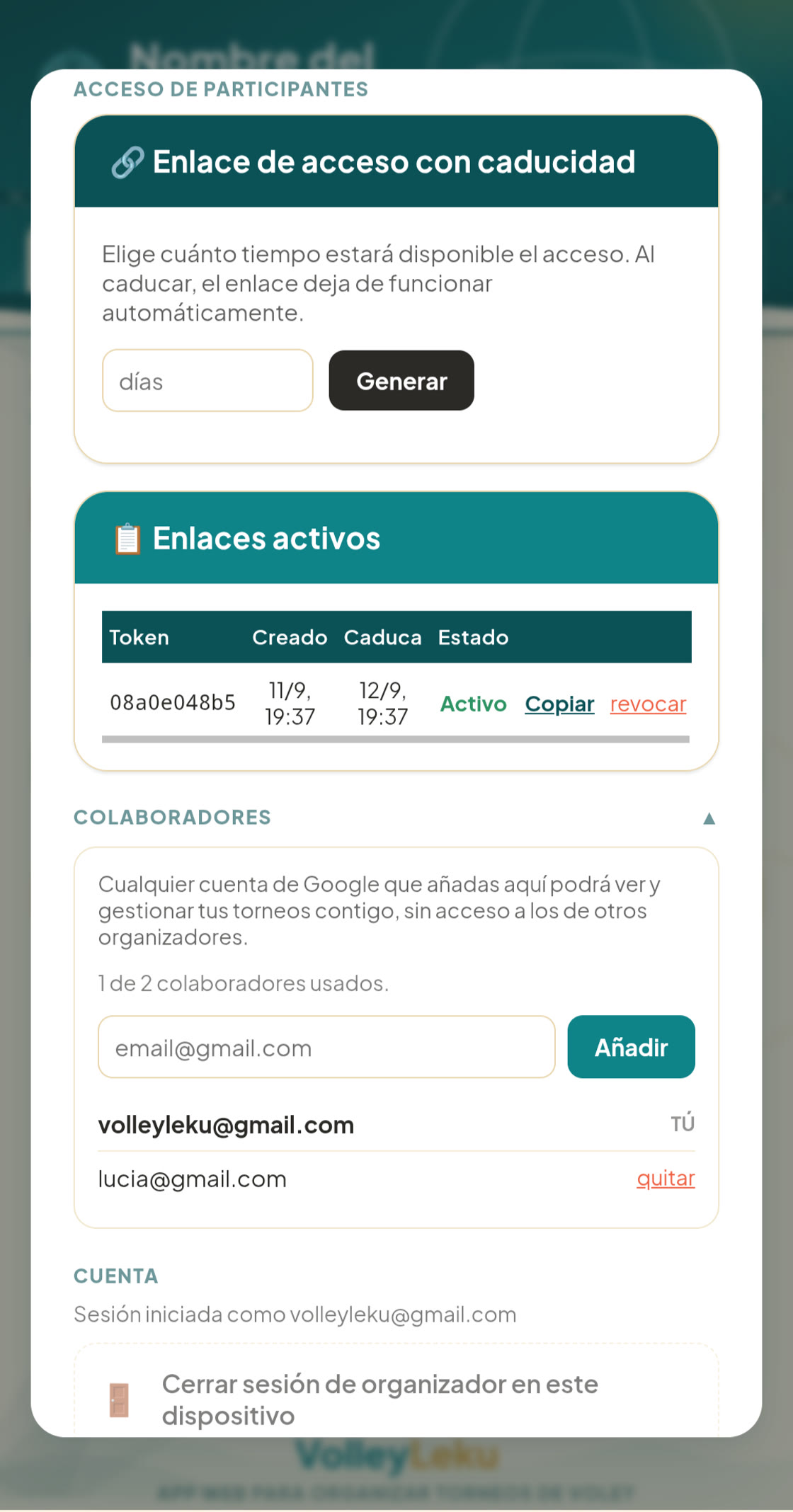
Organizing a tournament does not have to mean spending the day sitting at a table recording results. With the app on your phone you only have to record the result between matches, and you can let up to 2 collaborators help you.
Players, for their part, see the standings and the schedule live from their phone with a link, without signing up or installing anything.
How VolleyLeku solves it
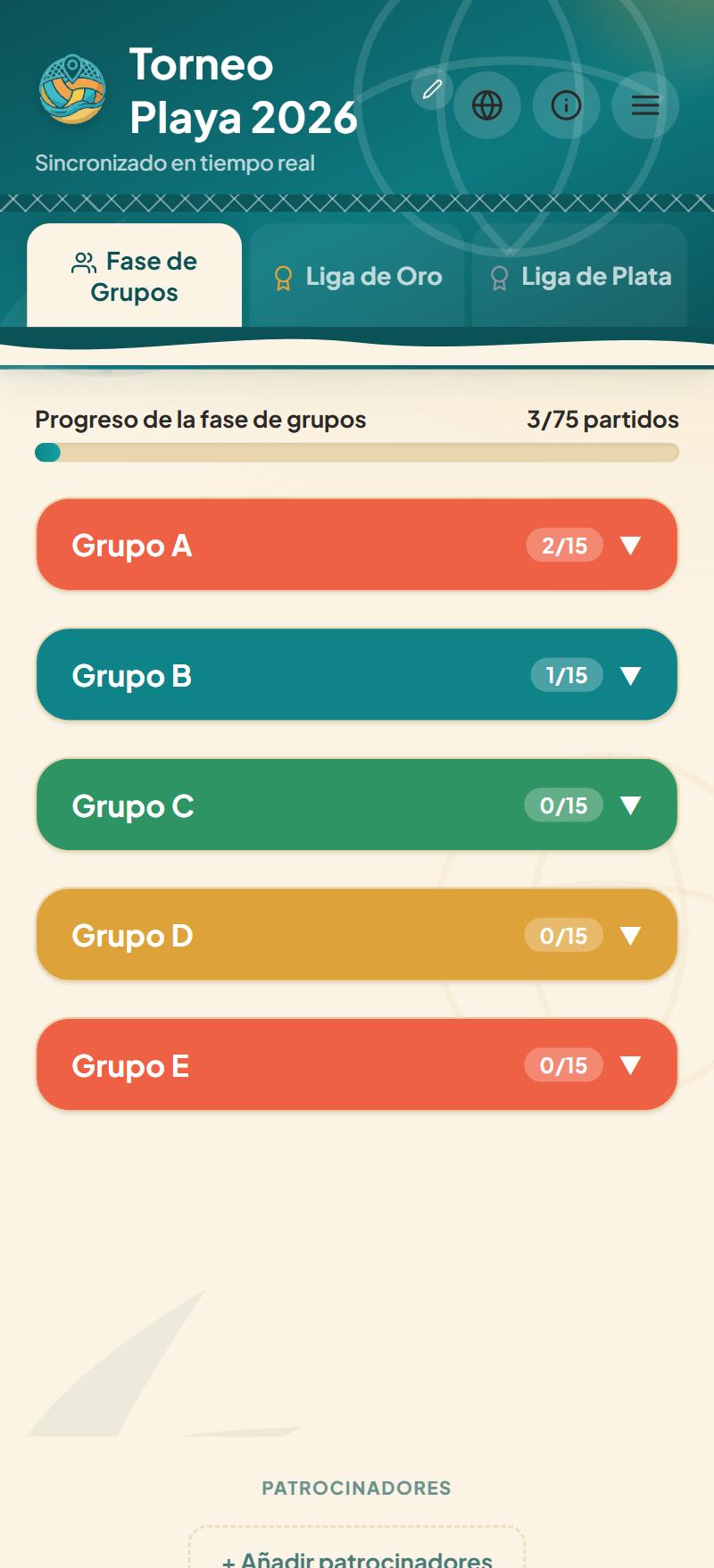
VolleyLeku generates the groups, the schedule and the standings from the pairs you enter, and keeps them up to date every time you record a result.
- Ready-made formats: Double Elimination, Single Elimination, Gold/Silver League, Swiss System and King of the Court (individual or by pairs).
- Automatic groups, schedule and standings, updated as you record each result.
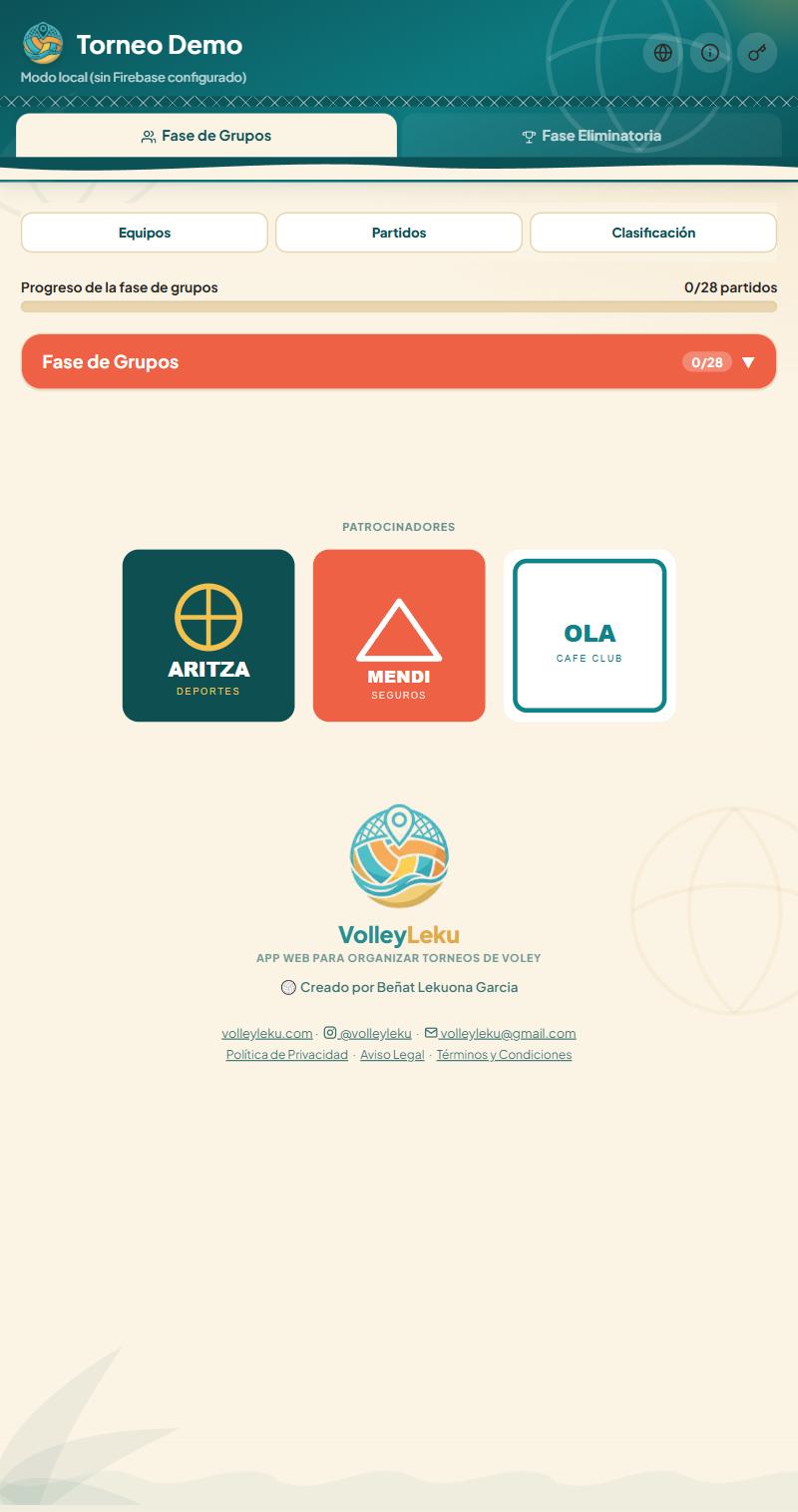
- Real-time results for anyone with the link.
- Free 1-day demo to try it with up to 6 pairs.
Frequently asked questions
How many pairs do you need for a 2x2 beach volleyball tournament?
At least 4 to have a tournament. For a full day, 8 to 16 pairs works very well: with fewer it is too short, and with more you should have several courts or spread the tournament over two days.
How many points is a beach volleyball match played to?
Under international rules, to 21 points with a two-point lead, and a third set to 15 if the sets are tied at one each. In amateur tournaments it is very common to play a single set to save time.
How many courts do I need for a one-day tournament?
It depends on the pairs and the format. As a reference, with 16 pairs in groups and a final stage there are about 32 matches: with 4 courts that is about 3 hours and 20 minutes, and with 2 courts double that.
Can I play in my own tournament while I organize it?
Yes. With VolleyLeku you only record the result between matches from your phone, and up to 2 collaborators can help you, so you do not have to spend the tournament sitting at a table.
Do players have to sign up or download an app?
No. They open the link you share, straight from their phone browser, and see the schedule and standings instantly, with no sign-up and no installation.
More guides: how to organize a beach volleyball tournament step by step (in Spanish).
Organize your beach volleyball tournament in minutes
Create your tournament for pairs and share the link with the players.
Get started with VolleyLeku